
Wildlife of Jawai, Rajasthan
The animals Jawai is known for — leopards, crocodiles, hyenas, bears and birds — and the open landscape they share with the region's shepherds.
Jawai's wildlife story is inseparable from its landscape. This is not a fenced reserve with managed sightings — it is open country where leopards den in granite caves, hyenas work the night scrub, crocodiles hold the reservoir edges, and shepherds move their flocks through it all. What follows is an honest portrait of the region's animals: what Jawai is known for, never a promise of what you will see.
Leopard
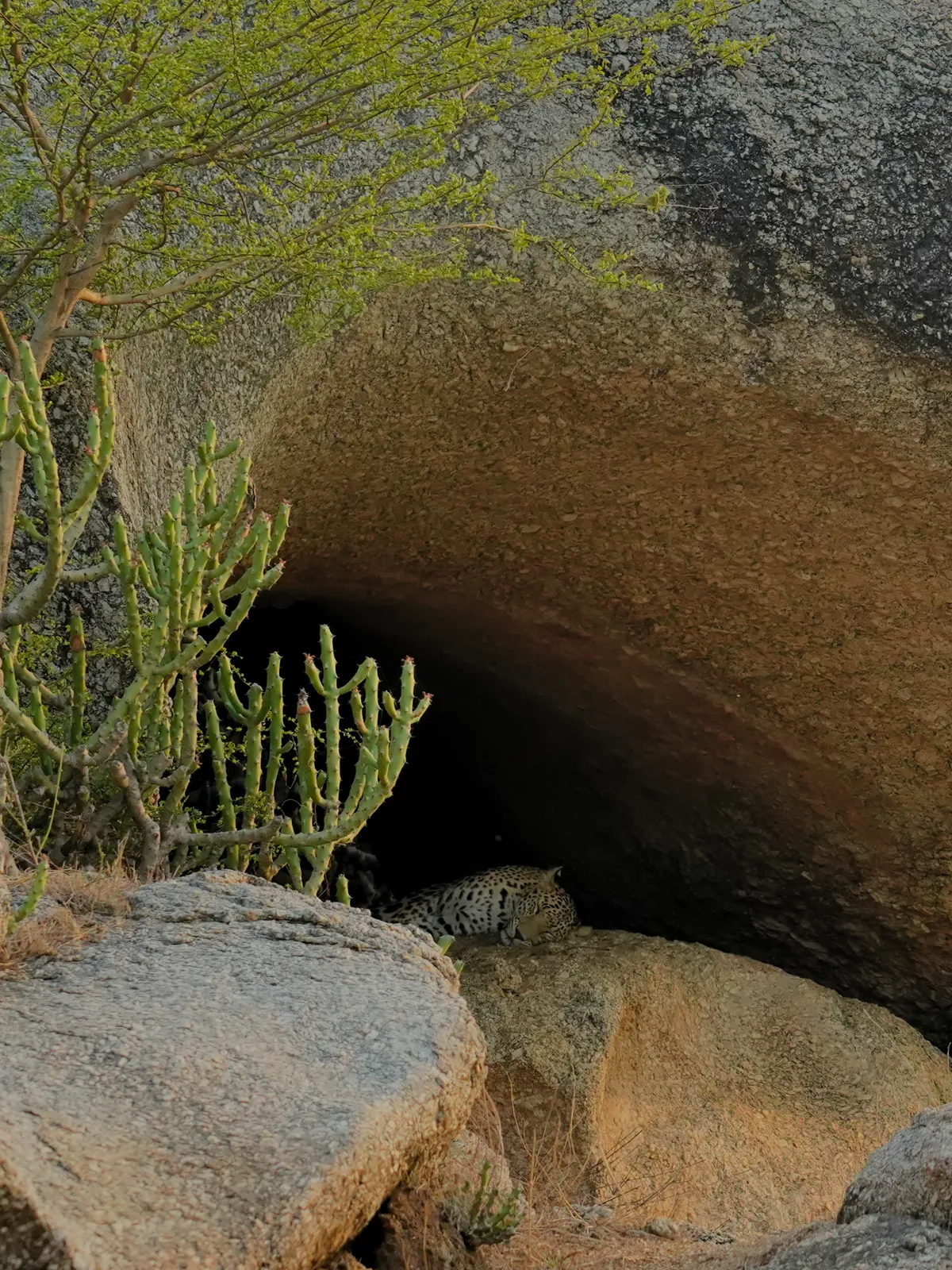
The Indian leopard is what put Jawai on the map. The granite hills are ideal leopard country — caves and crevices for shelter, rocky vantage points, and a landscape shared with livestock that has shaped generations of coexistence with the Rabari shepherds. Jawai is known for unusually relaxed leopards, accustomed to the rhythms of village life rather than the pressure of a fenced reserve.
They remain wild, elusive predators. Spotting one takes a good tracker, patience, and luck — sightings are never guaranteed, on any drive, at any price. When it happens, it is usually a distant shape on a rock face resolving through binoculars into spots and a long tail. That is the real Jawai moment.
Planning a drive? The leopard safari guide covers how safaris work and what to expect.
Marsh Crocodile
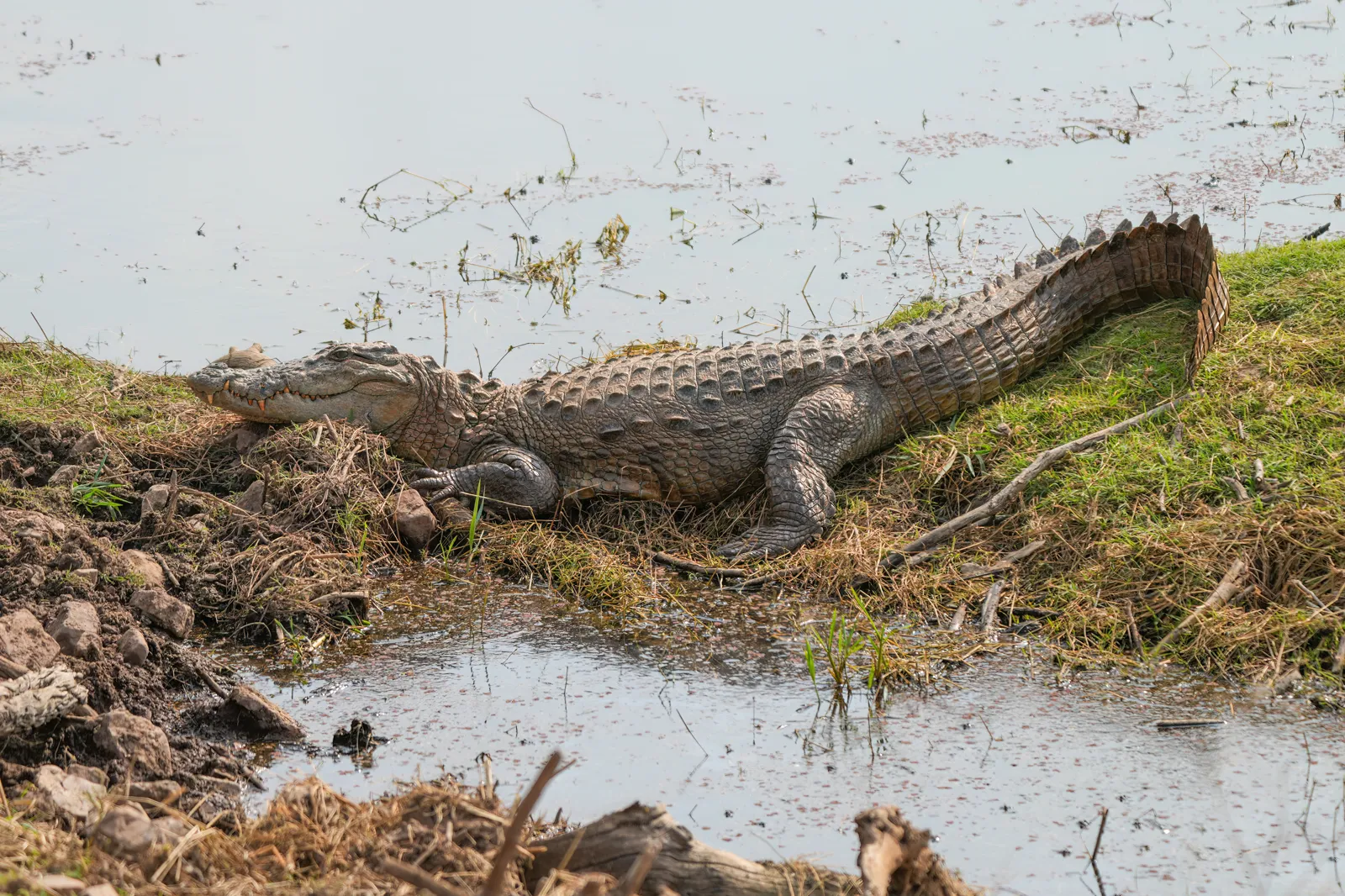
The Jawai Dam reservoir is known for its marsh crocodiles — mugger crocodiles that bask on the banks and slip through the shallows. They are most often seen as still shapes on muddy edges or just eyes and snout above the waterline, and they are a reminder that the dam is working wilderness, not a picnic backdrop.
Keep a respectful distance from the water's edge, especially with children, and never enter the water. The Jawai Dam guide covers visiting practically.
Striped Hyena & Jackal
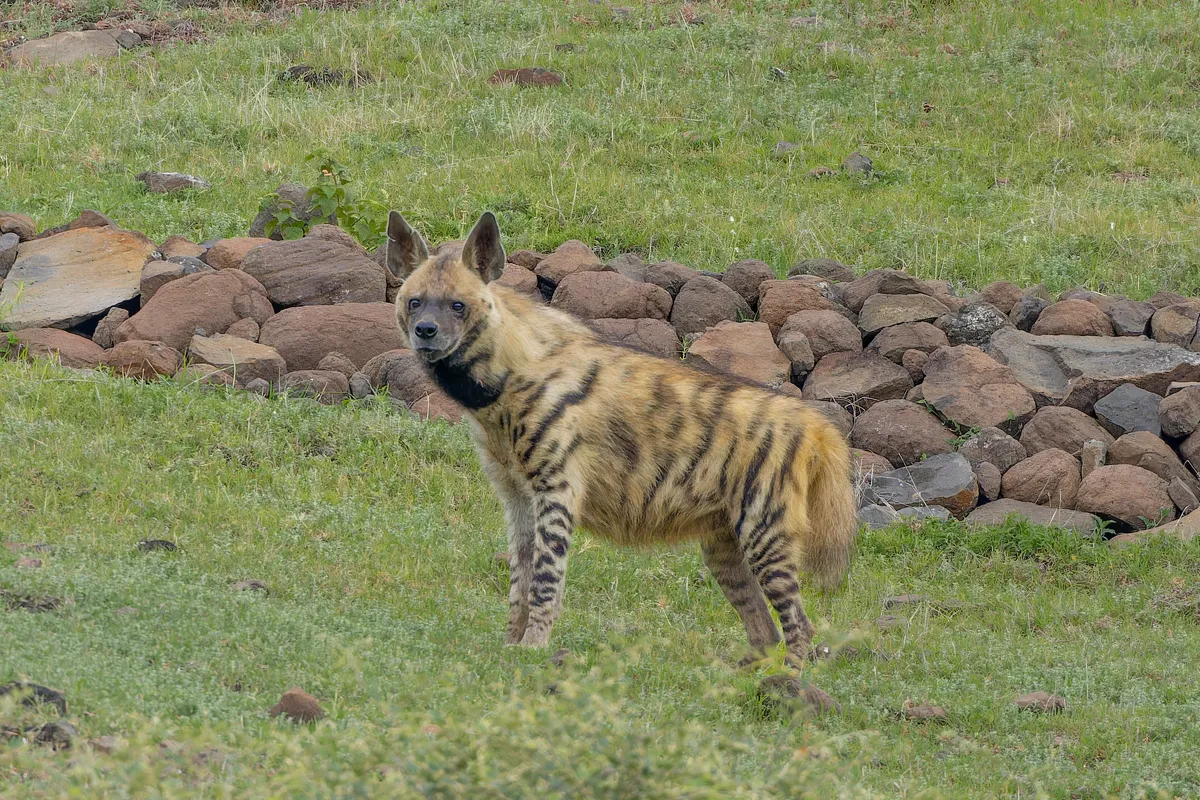
Jawai is known for its striped hyenas — shy, nocturnal scavengers that den in the rocky terrain and are occasionally glimpsed on evening drives or near village edges after dark. They are far less seen than the leopards, which makes an encounter feel earned.
Jackals are the more familiar voice of the night, their calls carrying across the scrub. Both species are part of the region's clean-up crew, and both are best appreciated from the vehicle, at distance, without pursuit.
Sloth Bear
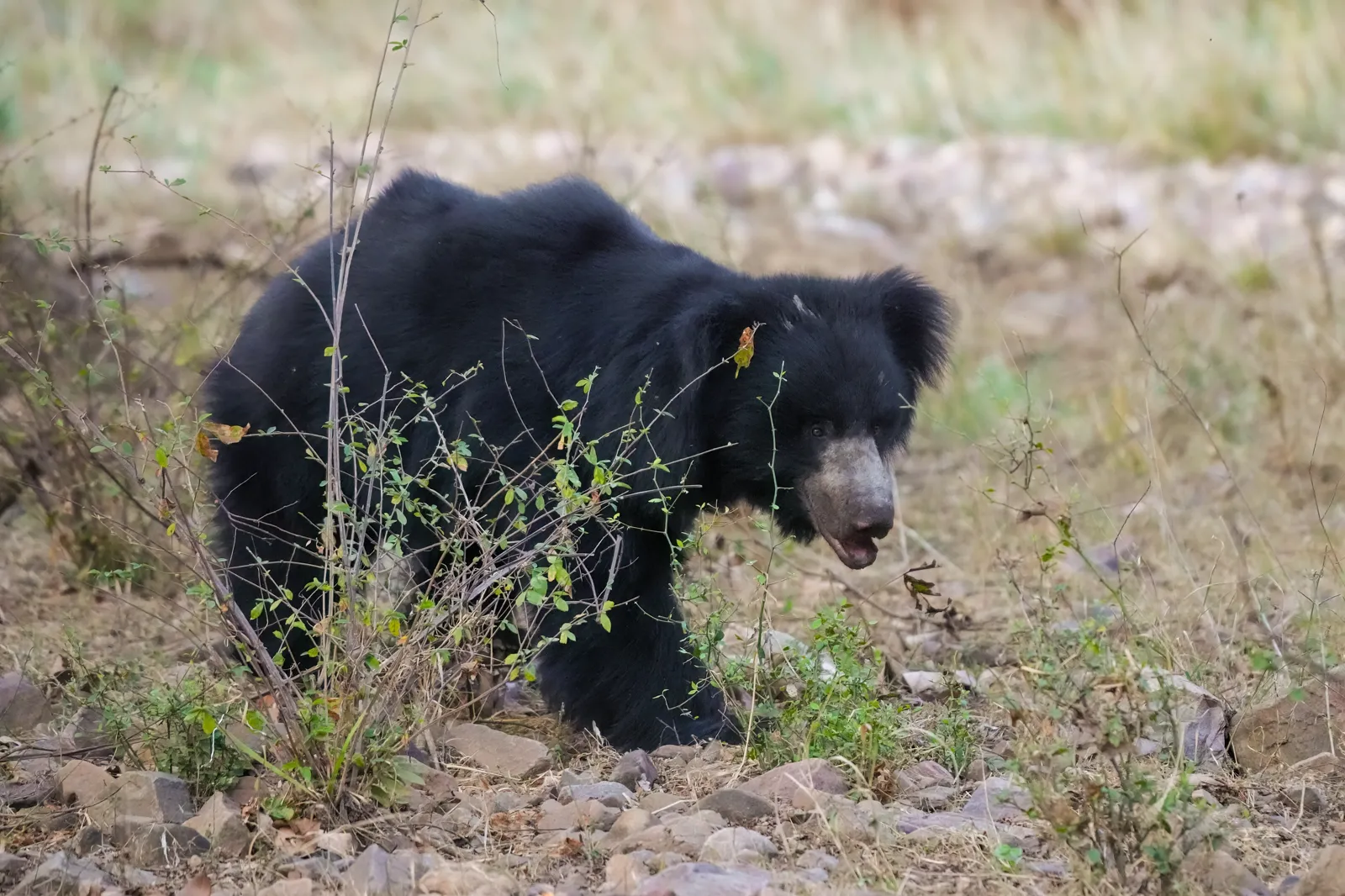
Sloth bears are occasionally encountered in the Jawai region — shaggy, powerful animals that keep to themselves and are far less predictable than the leopards. An encounter is uncommon enough to be the story of the trip, and it comes with a firm rule: give them space, stay in the vehicle, and let the tracker manage the situation.
Nilgai
Nilgai — Asia's largest antelope — graze the open scrub around Jawai and are among the animals you are most likely to actually see on a drive. The blue-grey bulls are unmistakable. They are also part of the leopard's world here: where nilgai graze nervously, trackers pay attention.
Birds
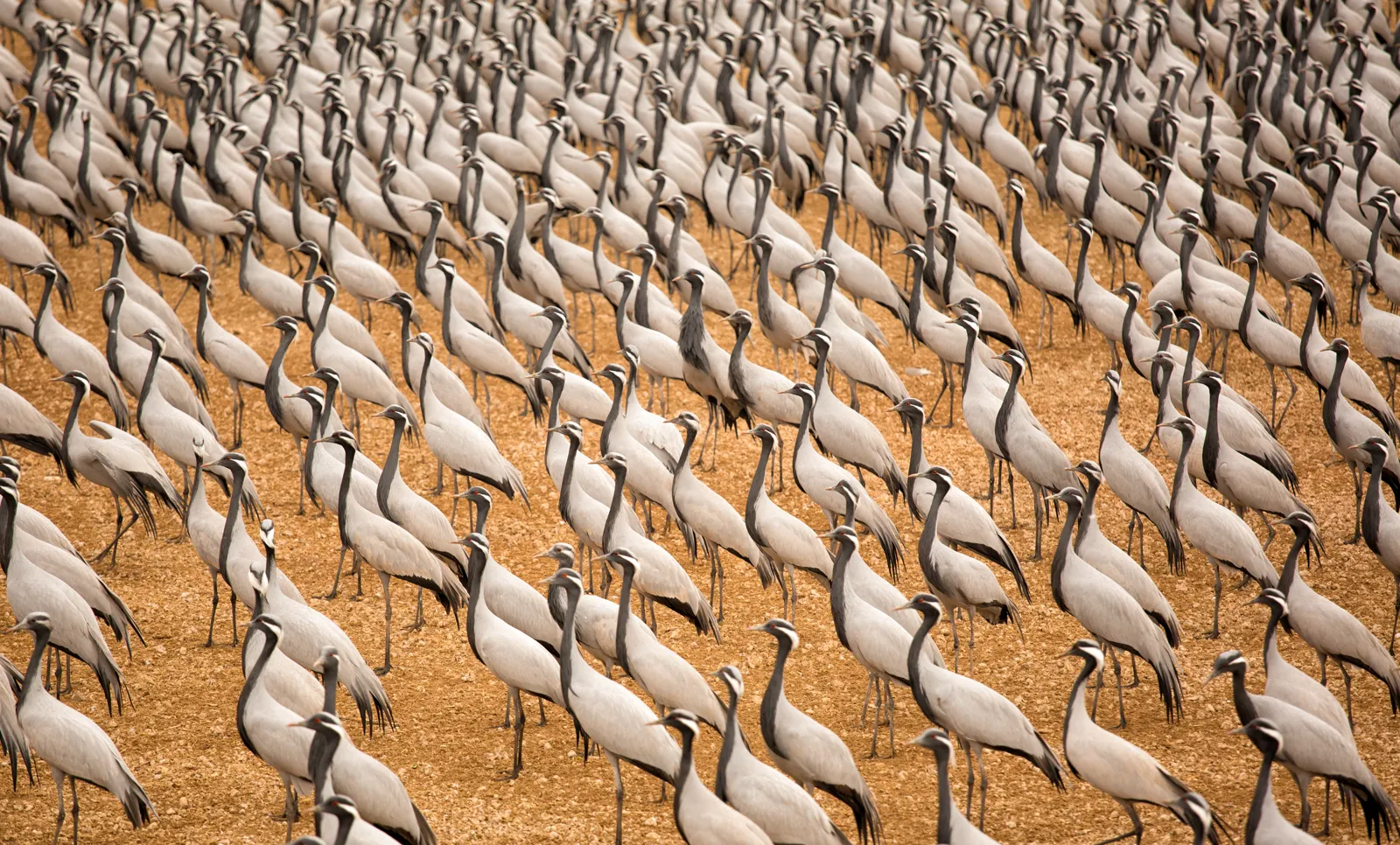
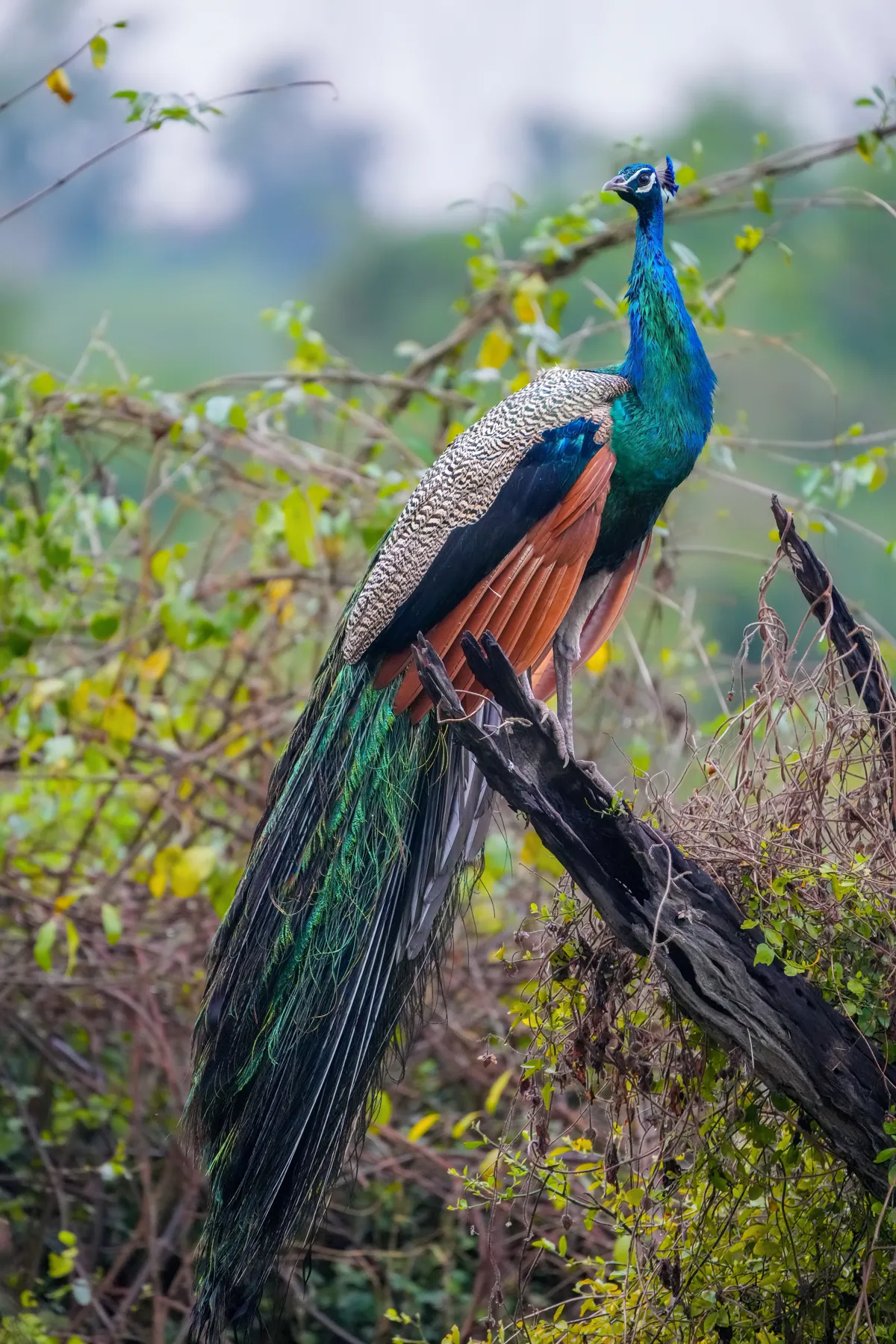
Jawai's birdlife runs on two calendars. Year-round, the Indian peafowl is everywhere — on rocks, in fields, calling at dawn. From October to March, the wetlands change character: flamingos, demoiselle cranes and pelicans may be seen around the dam and shallow water, joining resident waders and raptors.
The bird watching guide covers where to look and how to do it responsibly.
An Ecosystem of Coexistence
What makes Jawai's wildlife genuinely unusual is not any single species — it is the arrangement. Leopards, hyenas and shepherds use the same hills. Crocodiles hold the reservoir while cranes winter on its shallows. There is no fence separating the wild from the worked landscape; the boundary is negotiated daily, by animals and people who have shared this ground for generations.
That arrangement is also fragile. Visiting well means keeping it that way: stay on tracks, keep noise down, never feed or approach wildlife, and choose operators who keep their distance at sightings. The landscape you drive through is someone's grazing ground and some animal's home — treat it as both.
Seeing Wildlife Well
- Book the safari for the experience, not a guaranteed sighting — disappointment comes from wrong expectations, not from Jawai.
- Mornings and evenings are when the landscape is most alive; midday is for rest — yours and the animals'.
- Binoculars matter more than camera gear for actually seeing animals.
- Winter (October–March) adds the migratory birds to everything else — the richest overall wildlife window.
Ready to plan? Read the safari guide, check the best time to visit, and explore rooms at The Jawai Niwas for a base close to it all.
Planning Your Stay in Sumerpur?
Check availability and send a direct booking enquiry — our front desk confirms dates, room layouts, and verified tariffs with zero platform markup.
Related Guides & Information
Jawai Leopard Safari: Complete Travel Guide
Plan a Jawai leopard safari with essential tips on safari zones, morning and evening timings, Gypsy vehicles, and leopard sighting hotspots.
Bird Watching in Jawai, Rajasthan
Guide to birding in Jawai Bandh wetlands — Flamingos, Demoiselle Cranes, Bar-headed Geese, Pelicans, and migratory raptors in winter.
Jawai Dam: A Complete Visitor's Guide
Plan a visit to Jawai Dam in Rajasthan — magnificent dam gates, sunset viewpoint, crocodile basking spots, and migratory waterbirds.
Best Time to Visit Jawai, Rajasthan
Month-by-month guide to Jawai weather, safari sighting probability, migratory bird arrivals and optimal travel months (October to March).
Where to Stay in Jawai: Homestays & Resorts Guide
A realistic comparison of accommodation options in Jawai — budget homestays, mid-range guest houses and luxury safari camps.