
Bird Watching in Jawai, Rajasthan
Where to look, when to go, and which species you may encounter around Jawai's wetlands and reservoir.
Jawai is a leopard destination first, but birders who come in the right season find a second trip hiding inside the first. From October to March, the reservoir shallows and surrounding wetlands host winter migrants alongside a strong resident cast — and the Indian peafowl never really leaves.
The honest framing applies here as it does on safari: birds are wild, water levels shift, and the cast varies with the season. What follows is where to look and what you may encounter — never a checklist of guarantees.
Where to Look
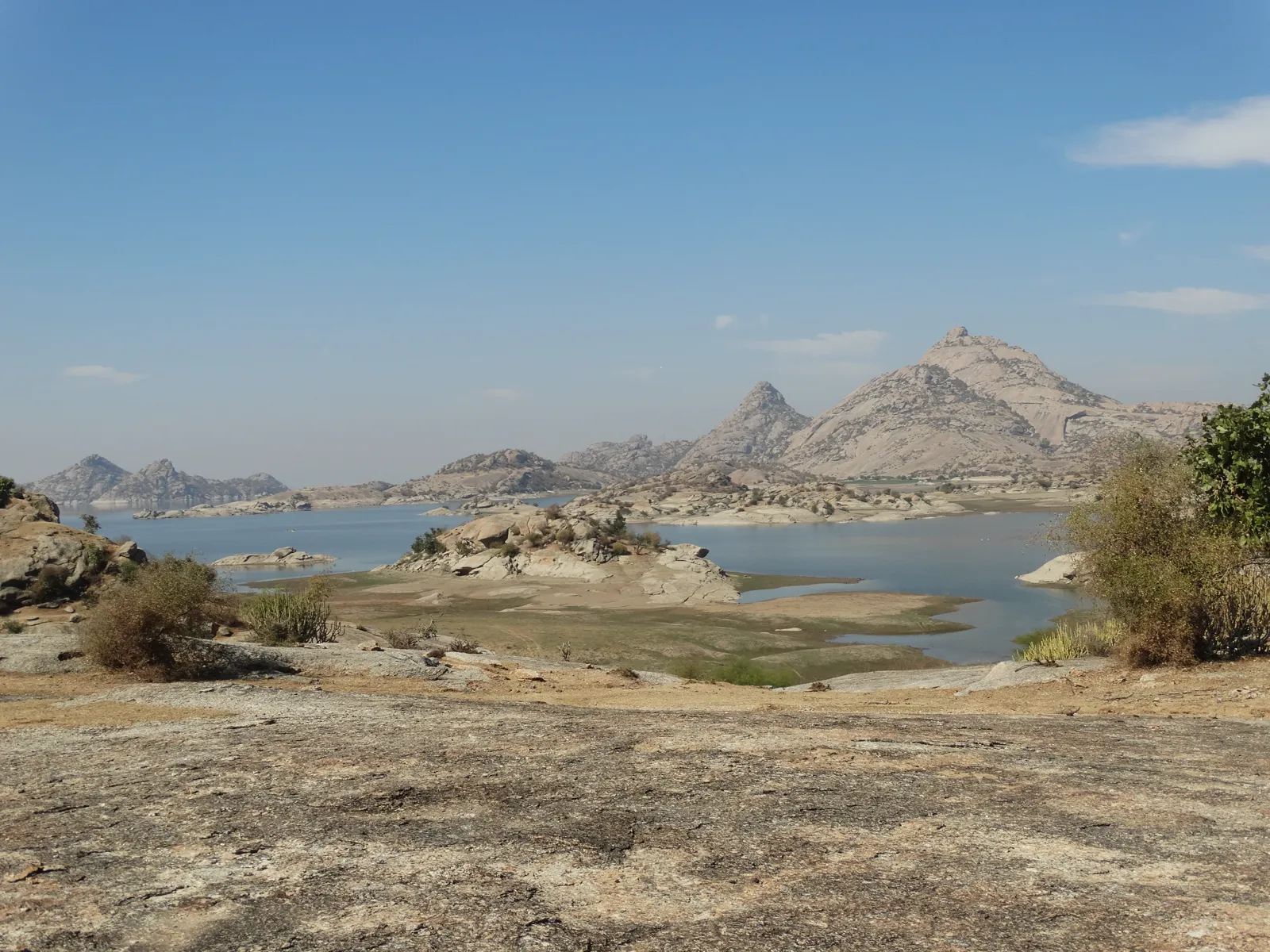
Dam edges & shallows
The reservoir's shallow margins are the main stage — waders, flamingos and cranes work the calm backwaters, especially in the morning.
Wetlands & marshy inlets
Where the water meets scrub, herons, egrets and kingfishers hunt. These quieter corners reward slow, patient observation.
Scrub & farmland
Away from the water: peafowl, francolins, larks and raptors over the open ground between the granite outcrops.
Granite outcrops
Raptors use the rocky rises as perches and vantage points — scan the hilltops, not just the water.
The Jawai Dam guide covers visiting the reservoir practically — pair a birding morning with a sunset evening there.
The Best Season for Birding
October–March is the birding season. This is when the winter migrants arrive — flamingos, demoiselle cranes, pelicans — joining the residents. The weather is also the year's most pleasant, which matters when you're standing at a water's edge at dawn.
April–June is hot and quieter for migrants, but resident birds are active around water in the early mornings. July–September brings the monsoon — dramatic skies, but check conditions before planning a dedicated birding trip.
Within any day, the first two hours after sunrise are the most productive. Late afternoons pick up again as the heat eases. See the best time to visit Jawai for the full seasonal picture.
Species You May Encounter
“May encounter” is deliberate — these are the birds Jawai's wetlands are known for, not promises.
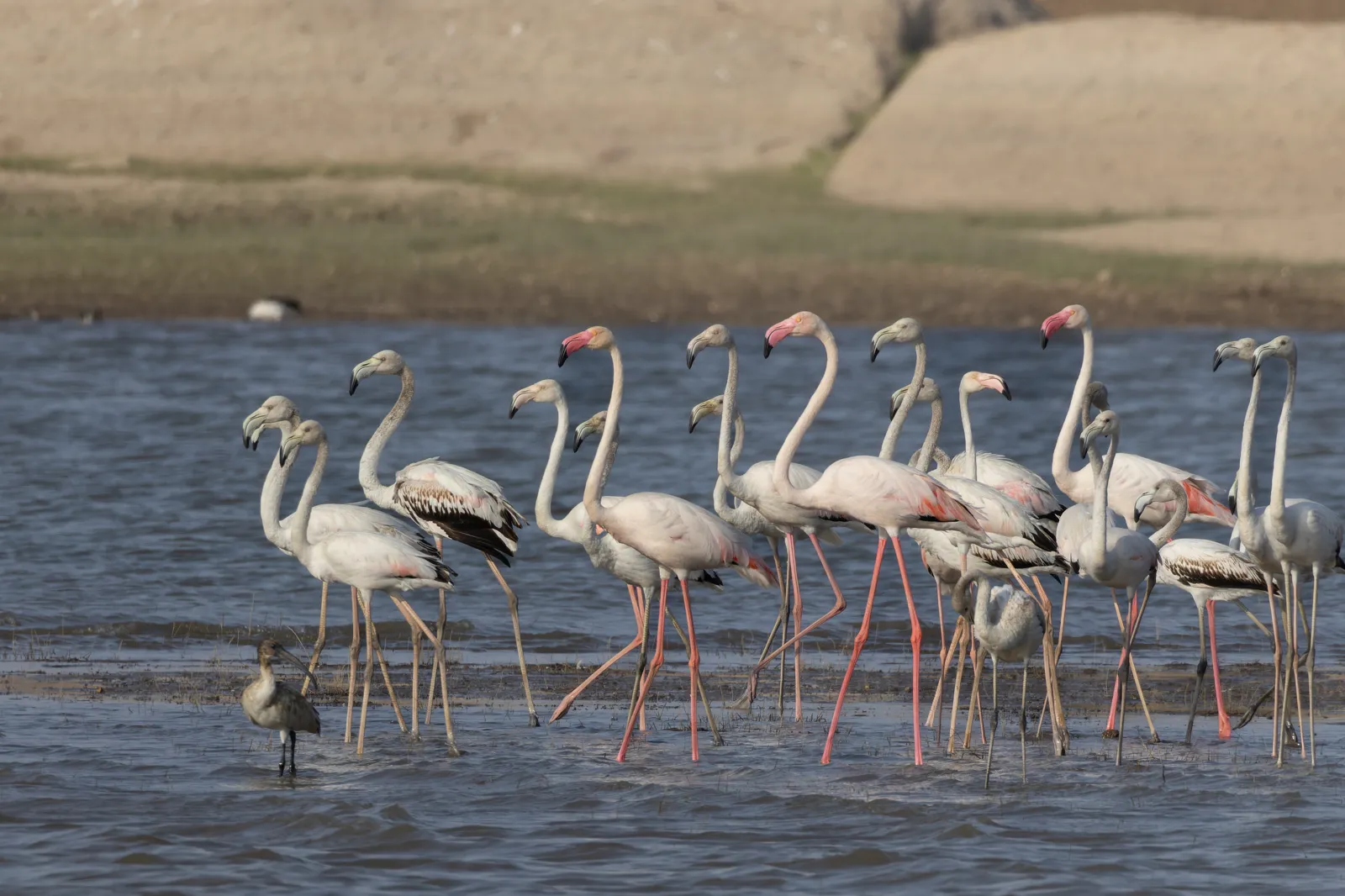
Flamingos
Winter visitors to the shallows — may be seen feeding in the calm backwaters from October to March.
Flamingos — a winter highlight of the wetlands.
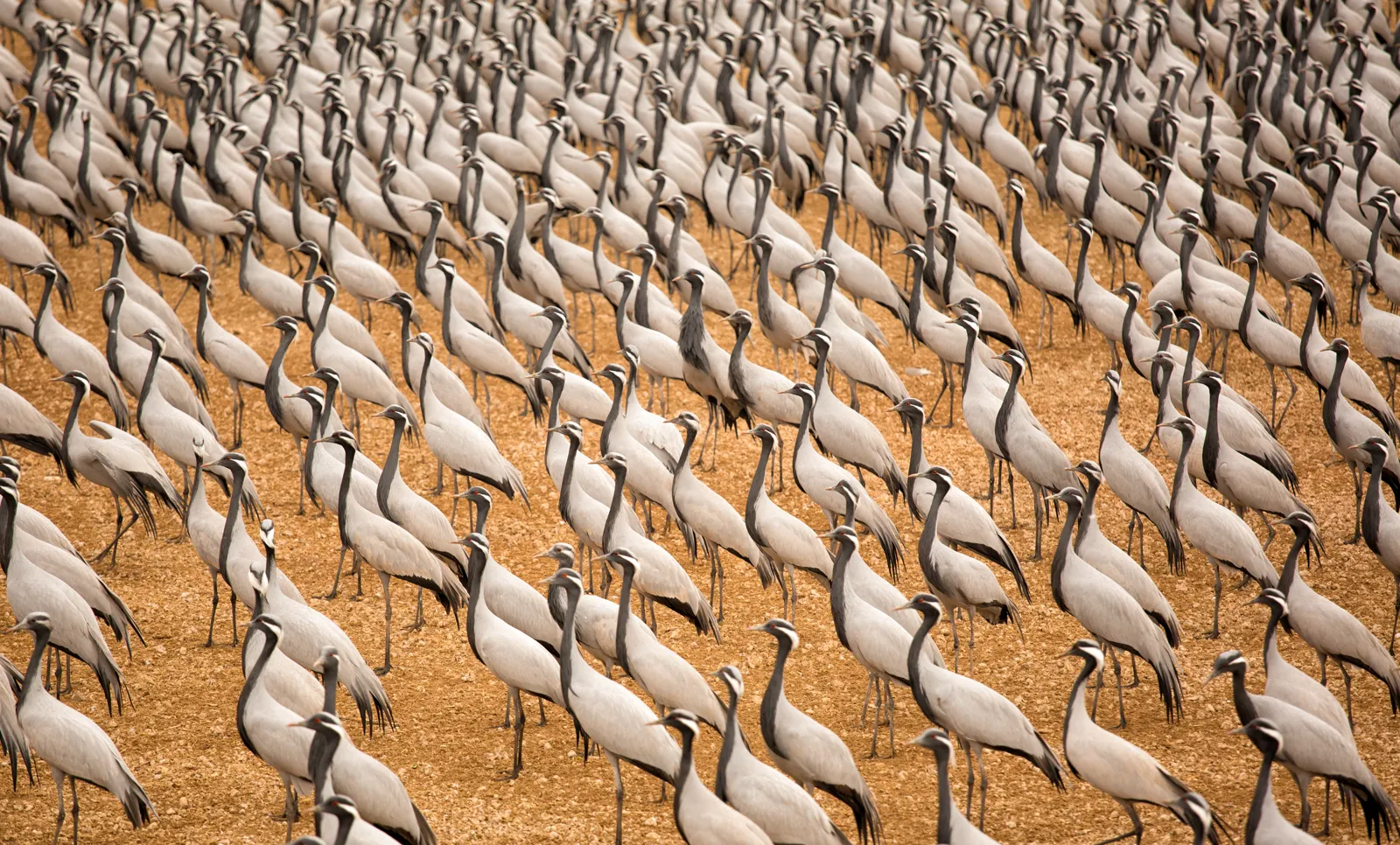
Demoiselle Cranes
Elegant winter migrants that gather in the region's wetlands; listen for their far-carrying calls at dawn.
Demoiselle cranes — winter visitors to the region.
Pelicans
May be seen on the reservoir in winter, often in loose groups working the open water.
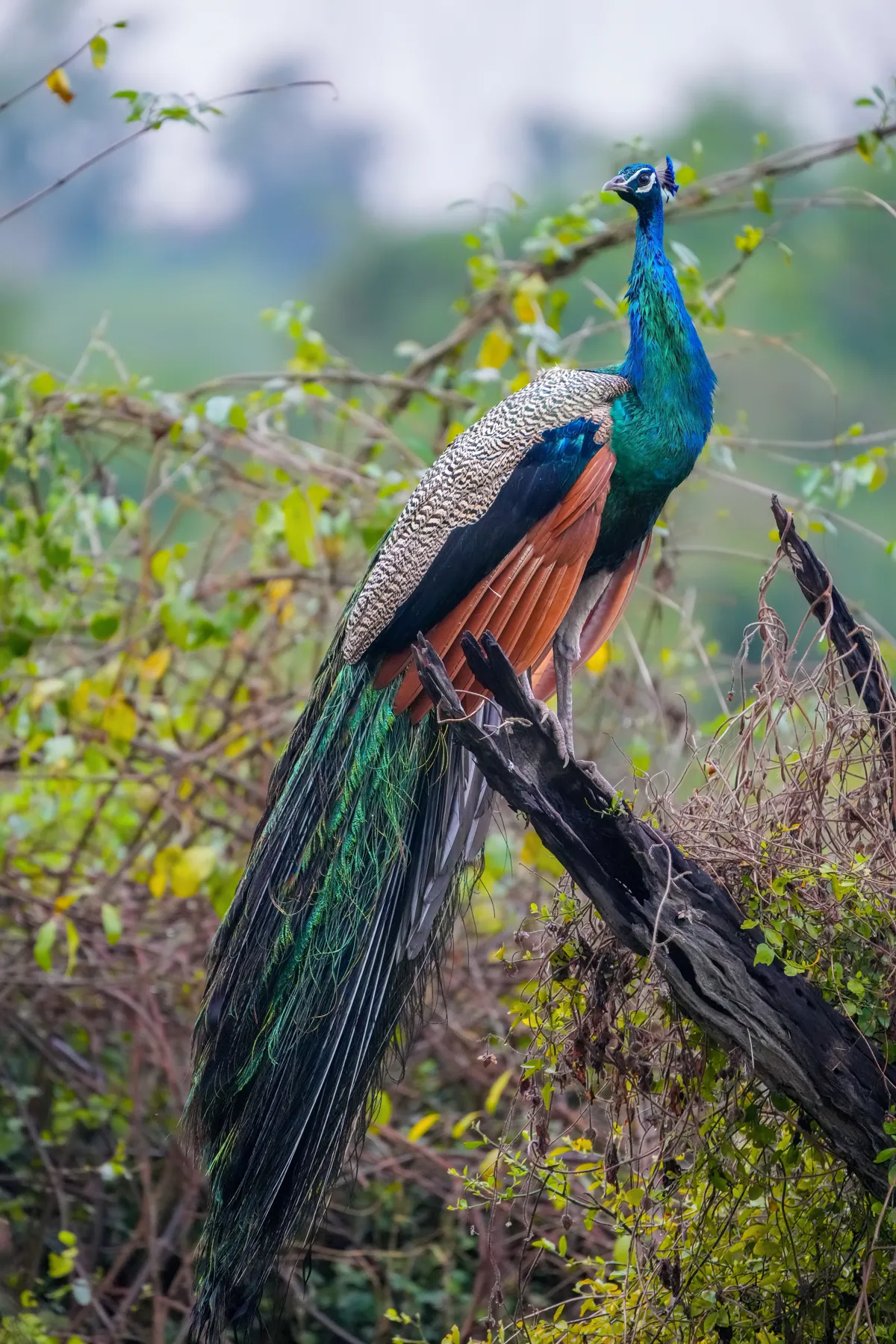
Indian Peafowl
A year-round presence — on the rocks, in the fields, calling at first light. Jawai's most reliable bird.
The Indian peafowl — present all year across Jawai.
Waders, Raptors & Residents
Herons, egrets, kingfishers and birds of prey work the water's edge and the scrub through the year.
Photography & Field Tips
Binoculars first, camera second
Most wetland birds are at a distance. A decent pair of binoculars will show you more than a phone camera ever will.
Work the golden hours
Low light flatters both birds and water. Midday heat haze ruins long shots — rest then, shoot early and late.
Stay low and still
Crouch at the water's edge, move slowly, and let birds come to you. Sudden movement clears a shoreline in seconds.
Watch the wind and sun
Approach with the sun behind you and keep downwind of wary species. Basic fieldcraft beats expensive gear.
Responsible Birding
The wetlands are a working ecosystem, not a hide. Keep your distance from feeding and roosting flocks — if birds are moving away from you, you are too close. Don't play recorded calls to lure birds out; it stresses them, especially in the breeding season. Take nothing but photographs, leave no litter, and keep noise down.
Remember the reservoir's other residents too: marsh crocodiles use the same edges. Stay well back from the waterline and never wade in for a better angle.
Fitting Birding Into Your Trip
Birding mornings pair perfectly with safari evenings — the same golden hours, different quarry. Give it at least one dedicated morning in the October–March window; two if you're serious. The Jawai itinerary guide shows where birding fits in 2 and 3-day plans.
Early starts are easier from a nearby base — explore rooms at The Jawai Niwas and be at the water's edge by sunrise.
Planning Your Stay in Sumerpur?
Check availability and send a direct booking enquiry — our front desk confirms dates, room layouts, and verified tariffs with zero platform markup.
Related Guides & Information
Wildlife of Jawai, Rajasthan
Explore the unique ecosystem of Jawai — coexistence of Indian leopards, marsh crocodiles, striped hyenas, sloth bears and over 100 bird species.
Jawai Dam: A Complete Visitor's Guide
Plan a visit to Jawai Dam in Rajasthan — magnificent dam gates, sunset viewpoint, crocodile basking spots, and migratory waterbirds.
Best Time to Visit Jawai, Rajasthan
Month-by-month guide to Jawai weather, safari sighting probability, migratory bird arrivals and optimal travel months (October to March).
Jawai Leopard Safari: Complete Travel Guide
Plan a Jawai leopard safari with essential tips on safari zones, morning and evening timings, Gypsy vehicles, and leopard sighting hotspots.
Where to Stay in Jawai: Homestays & Resorts Guide
A realistic comparison of accommodation options in Jawai — budget homestays, mid-range guest houses and luxury safari camps.